-
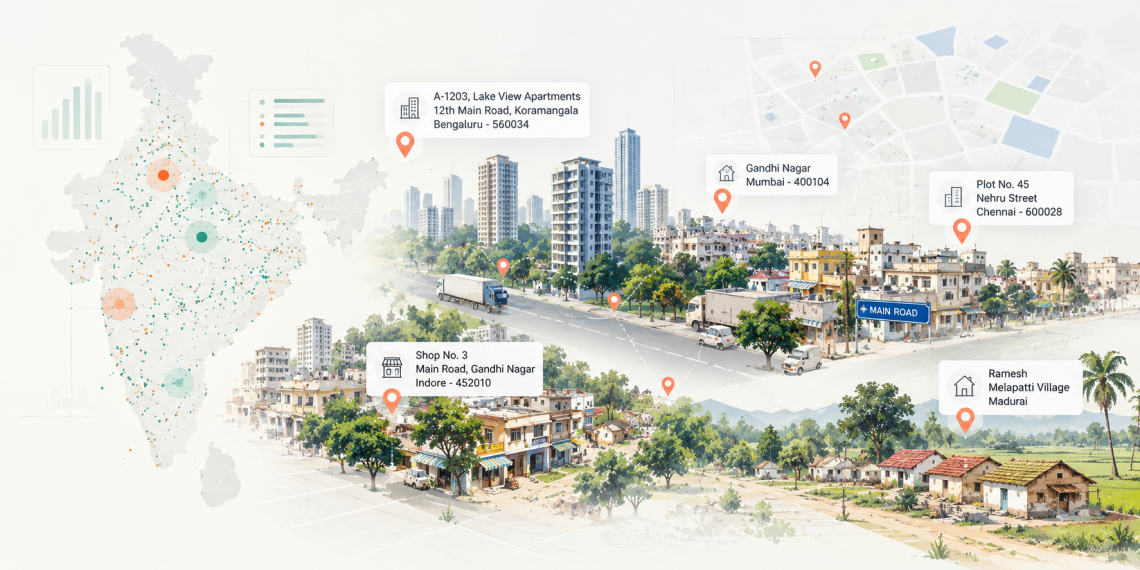
Beyond PIN Codes: Understanding the Complexity of Indian Geography
The author explores the complexities of address standardization in India, revealing that PIN codes are too broad for effective decision-making in e-commerce and logistics. They advocate for a new, detailed geographic unit that reflects local nuances, emphasizing the importance of address intelligence in reducing costly delivery errors while highlighting the unique challenges presented by Indian addresses.
-
Demographics by ZIP code: the free federal data B2C founders use instead of Experian
The paid demographic-data industry – Experian Mosaic, Claritas PRIZM, Nielsen Segmentation – is worth over $10 billion a year. B2C brands can access similar data from the government’s data source for free. Most of what these tools sell is one dataset in a nice wrapper: the American Community Survey. The ACS is the deepest public source of demographic data in the United States, published every year by the US Census Bureau, and available at every ZIP code in the country. Usually, this is the beginning layer for most of the audience tools that power the demographic layer. Most of the D2C players don’t know its existence, and even if they…
You May Also Like
The 11 public datasets every US D2C brand should be using
-
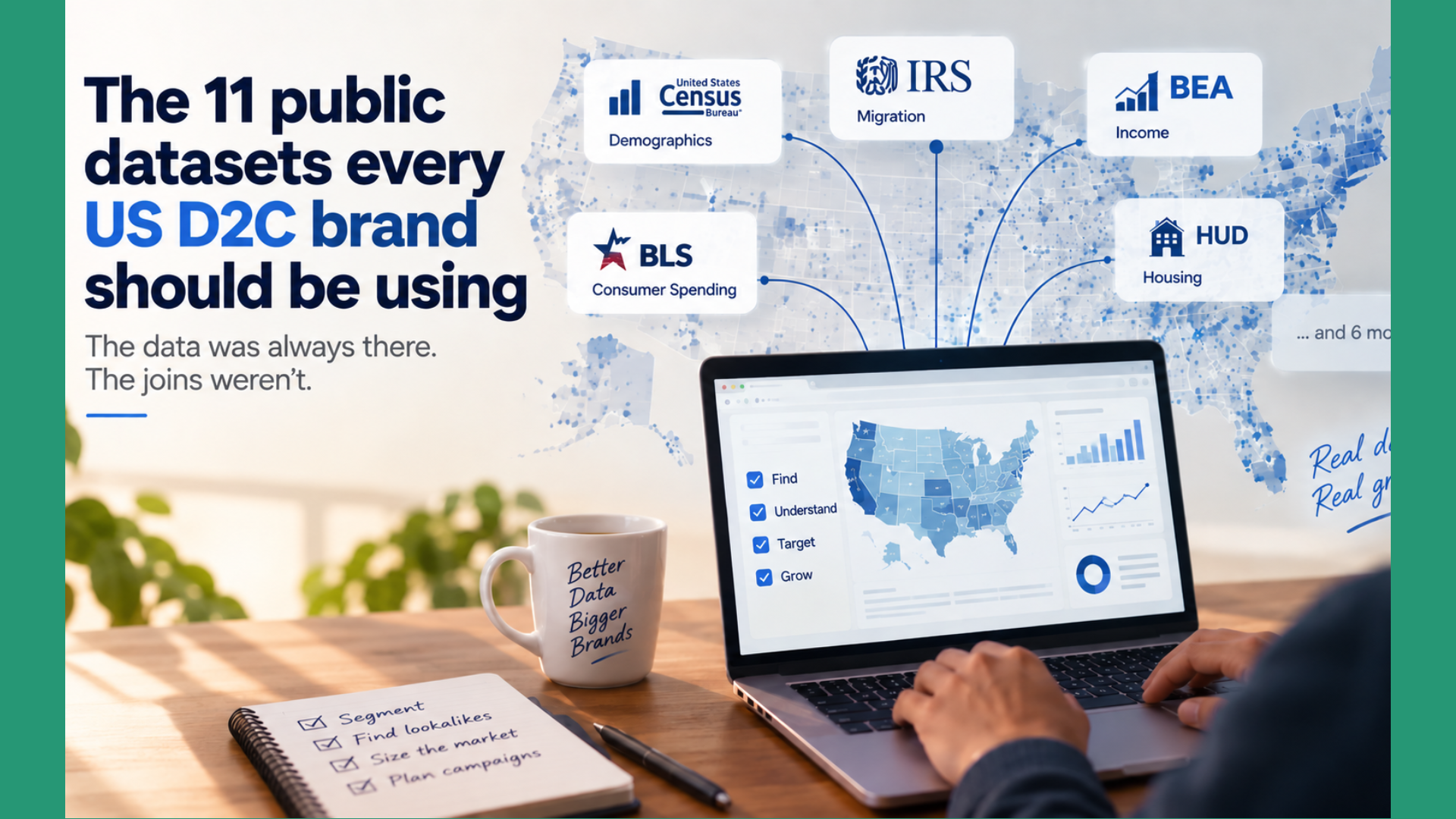
The 11 public datasets every US D2C brand should be using
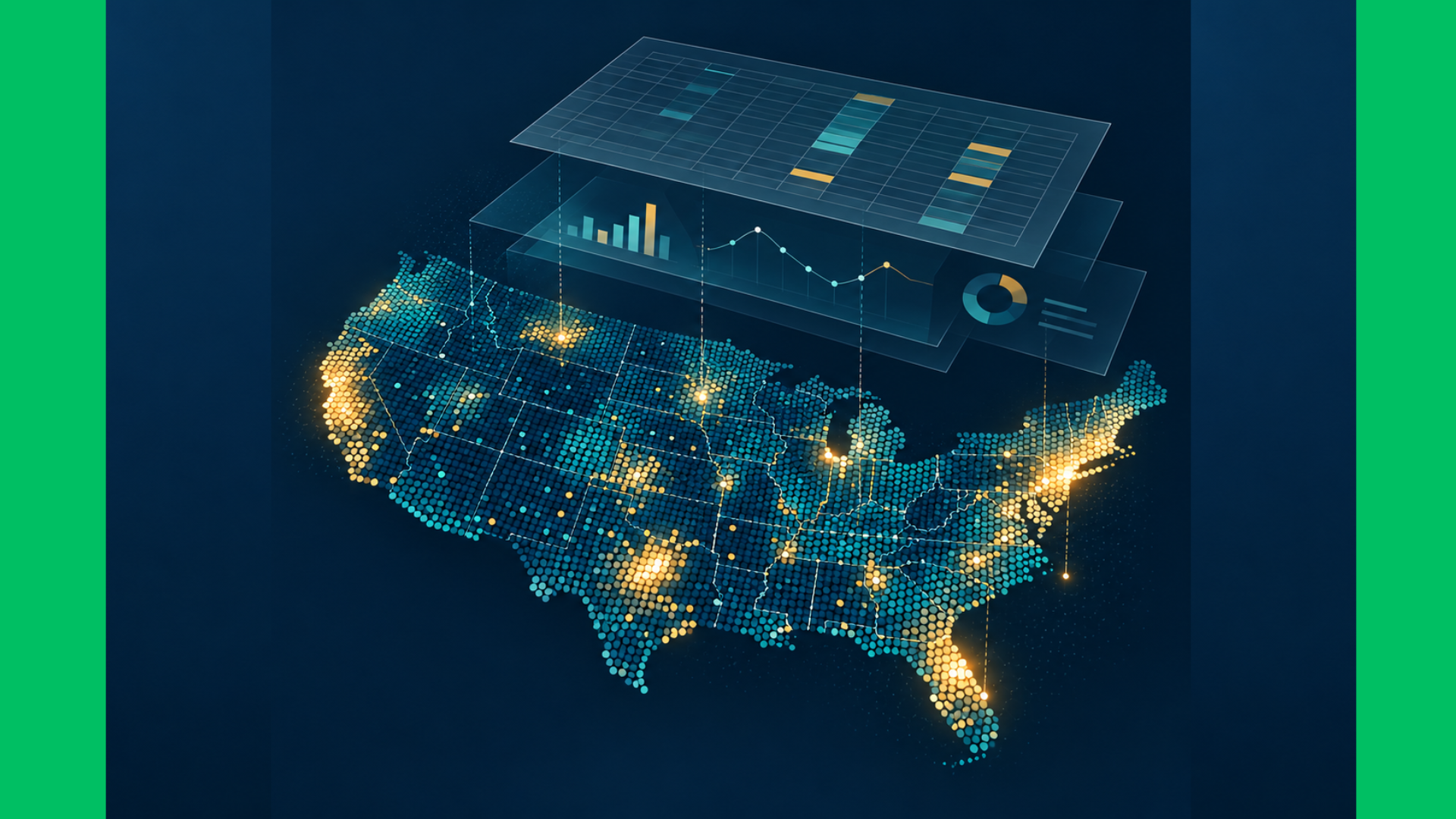
The data was always there. The joins weren’t. D2C founders pay $499 a month for audience insights, a few hundred more for a Meta ad partner claiming proprietary demographic data, and another chunk for lookalike models built on data anyone can pull for free. The federal government publishes better data than most of what these tools resell. Household income at every ZIP in America. Category-level spending by income bracket. Where affluent households are relocating. Where broadband can actually support your video checkout. What Americans have stopped doing with their time. None of it is hidden. All of it is free. Most of it has been publicly available for over a…
-
Where to Grow a Premium DTC Brand: What I Found Mapping Every US ZIP Code
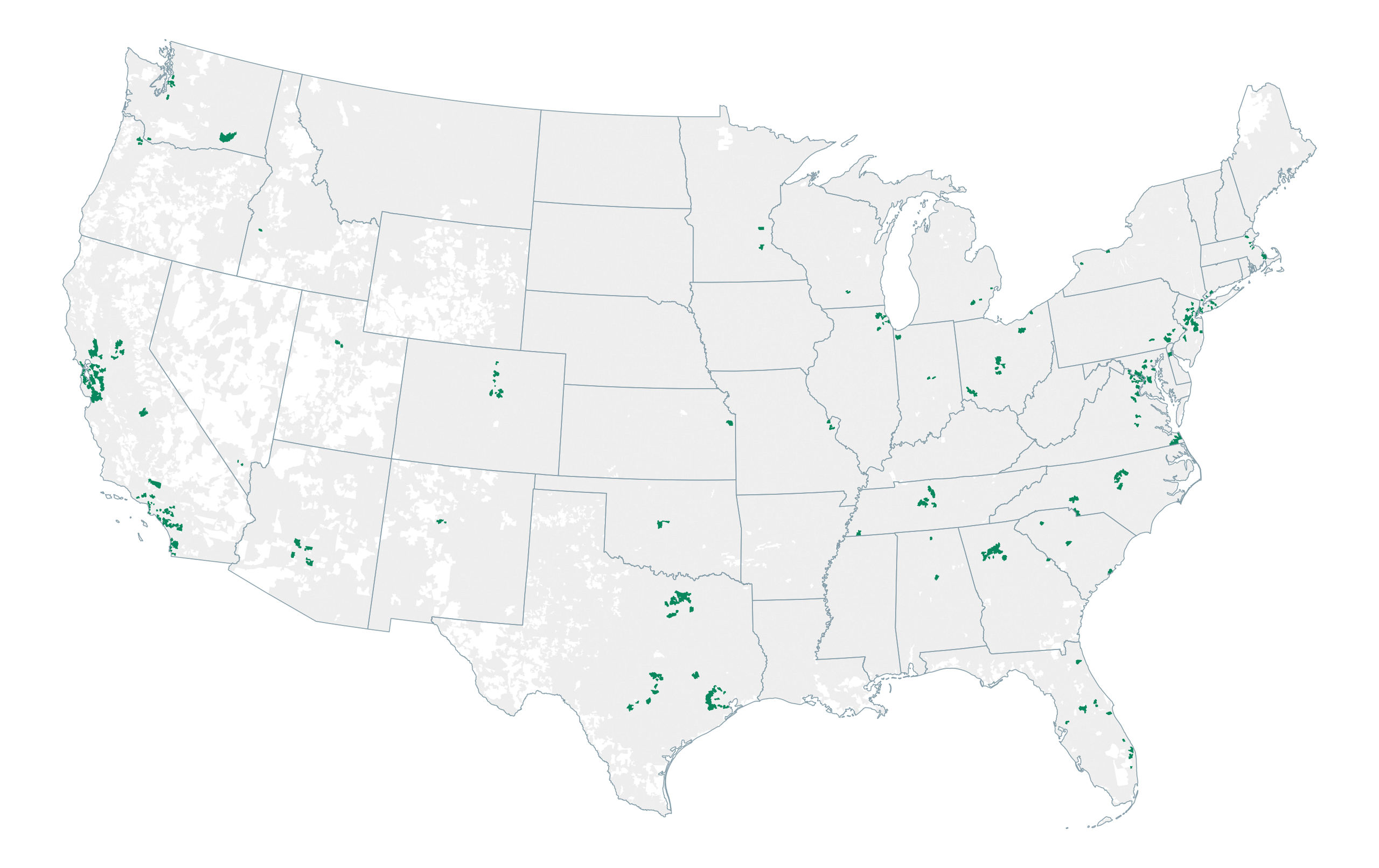
If you run a premium DTC brand in the US, you already know that not all ZIP codes are equal. But how unequal? And where, specifically, do the customers live? I pulled Census data on all 33,791 US ZIP codes, ranked them by ZIP Target Score, and mapped the top 500. That’s about 1.5% of America’s ZIP codes. Those 500 ZIPs represent over $1.4 trillion in household income annually — roughly the size of Spain’s economy — packed into a fraction of a percent of the country’s land area. The map looks like this: At first glance, it confirms what everyone expects: the coasts light up, some clusters in Texas…
-
What is a penetration-vs-potential map?
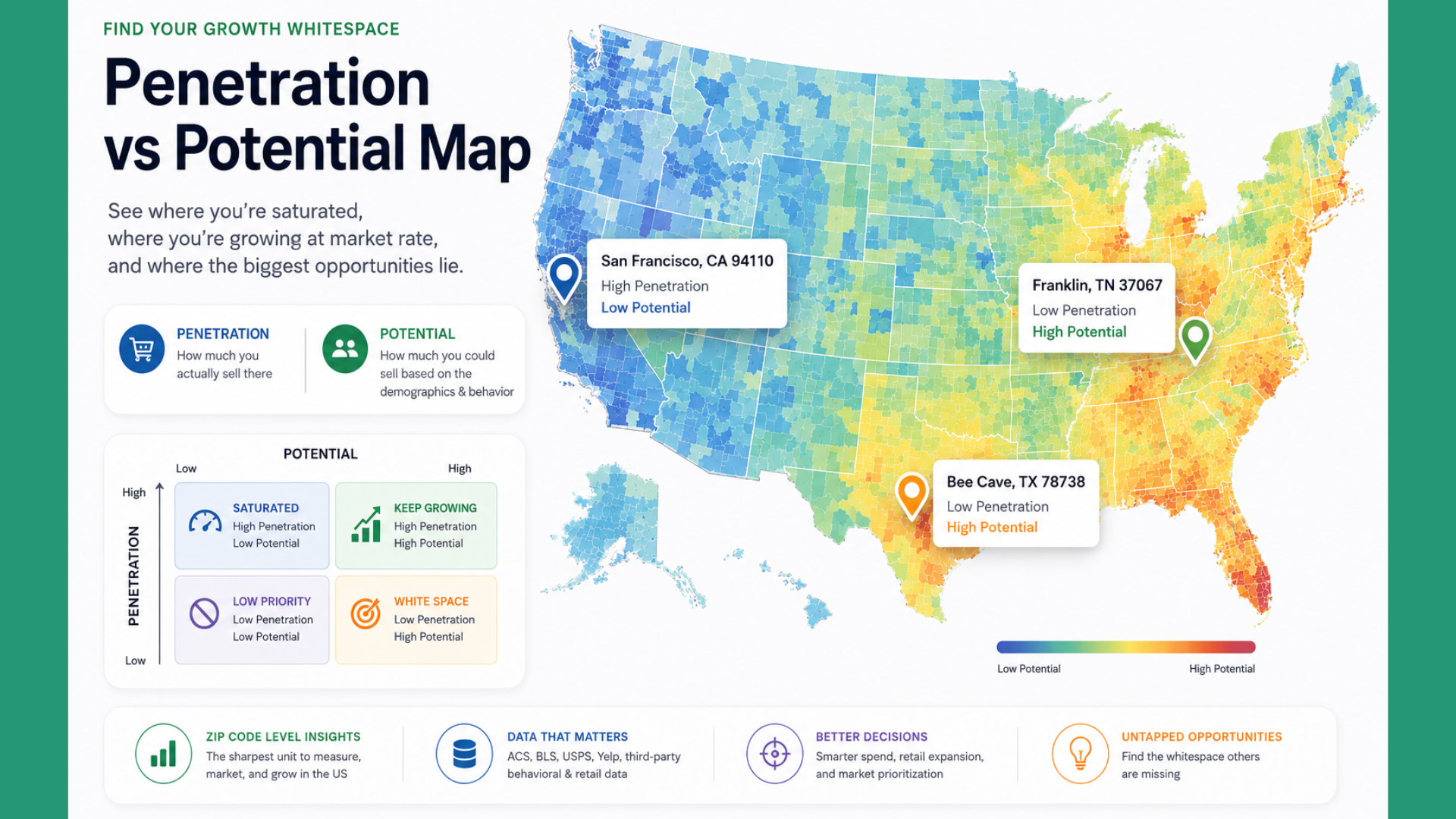
A penetration-vs-potential map is a geographic view of a business that plots two numbers side by side for each geographic area, such as a ZIP code, DMA, county, or postal region. Penetration – how much you actually sell there – and Potential – how much you could sell there based on the demographics and behavior of that geography. The gap between the two helps you understand : For US D2C brands, ZIP code is the sharpest unit to measure these variables. A few of the reasons are that ZIPs align with USPS delivery, US Census (ACS) demographics, and Meta/Google ad geo-targeting – the same geography is in your orders, your…
-
Every Purchase Has a Location, but no DTC brand uses it
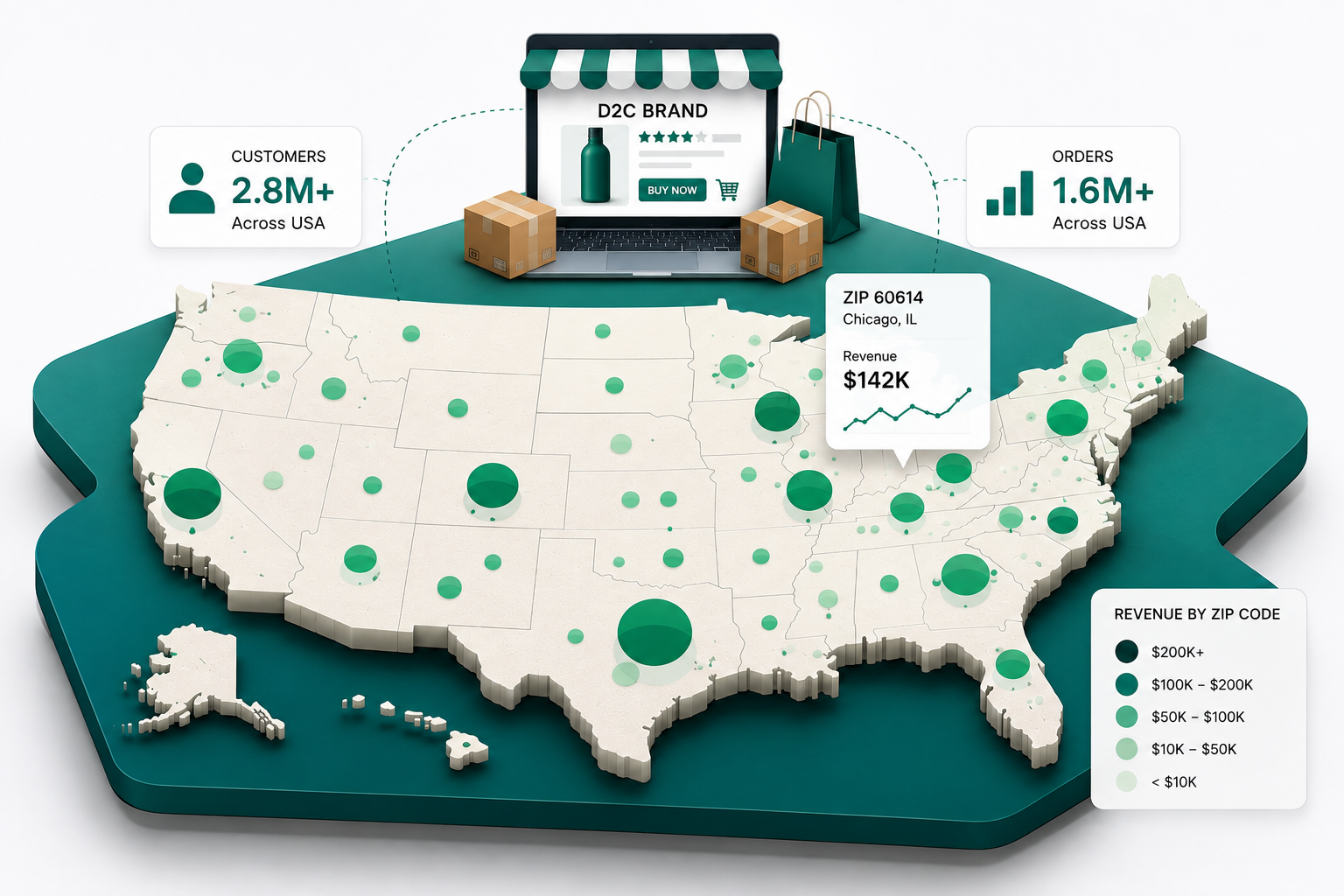
I keep having the same conversation with D2C founders. They pull up their sales dashboard and point at three glowing dots on the US map — usually Austin, LA, Miami, sometimes Denver or NYC. “That’s where we’re strong,” they tell me. “We’re doubling down there next quarter.” I’ve started asking one question in reply: “How do you know you’re strong in Austin — or is Austin just where you started?” Because those two things look identical on a map. A ZIP doing well because it fits your product looks exactly the same as a ZIP doing well because it was your friend group, your first podcast, your launch city. Same…
-
E-commerce Runs on Clicks. Customers Live in Places
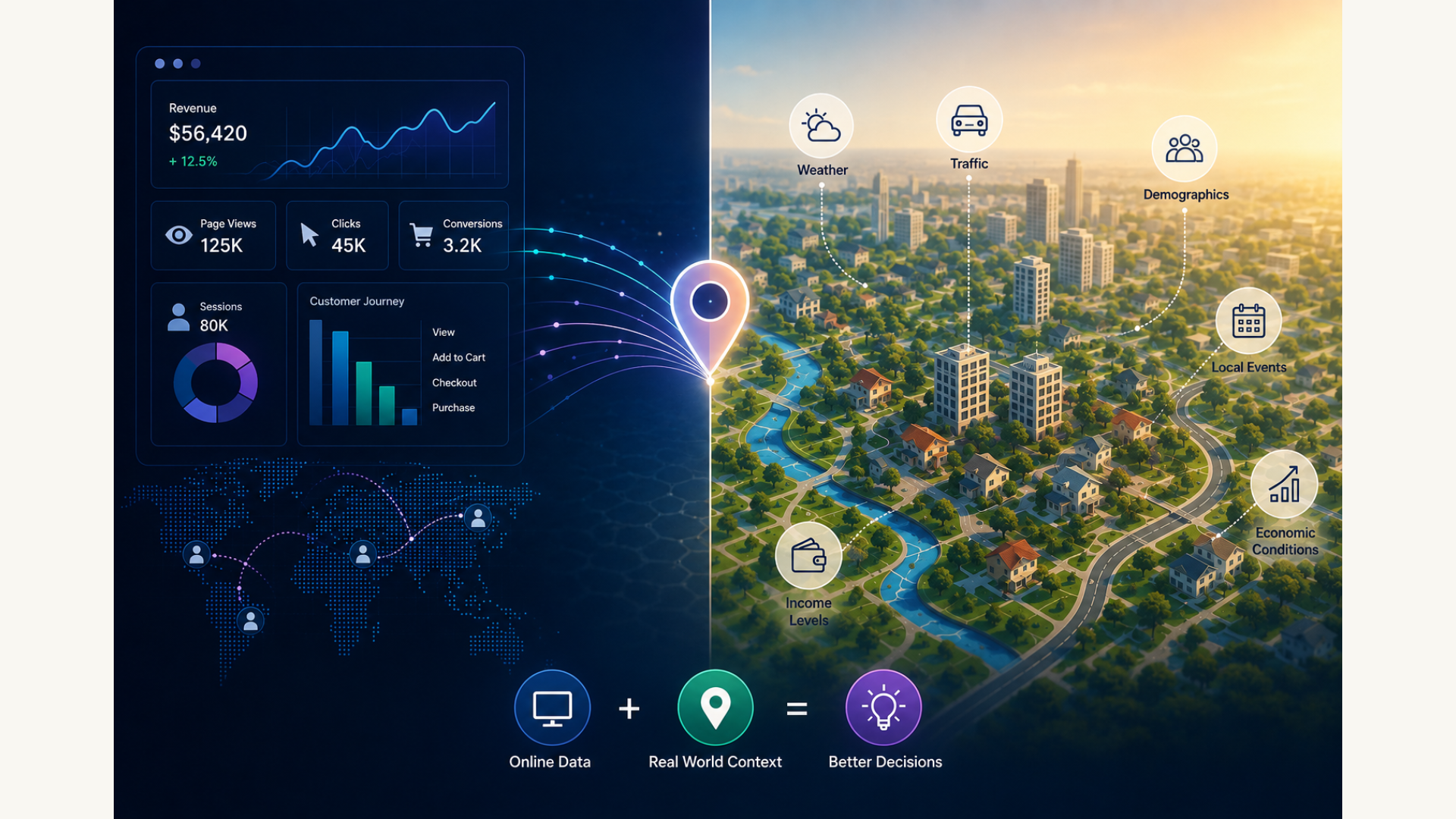
For the past two decades, e-commerce has been built around one belief: everything happens online, and everyone is online. Most metrics focus on page views, sessions, clicks, impressions, conversions, customer journeys, attribution models, retention curves, and lifetime value. Every interaction a customer has with a website becomes another event in an analytics dashboard. Over time, we have perfected the whole ads-to-purchase cycle, but we still forget about the most influential variables for every purchase Geography Geography is not merely about countries, cities, or places on a map. It is about the relationship between people and the environments in which they live. Every customer exists somewhere. They wake up in a…